
What Treatments are Best for Reducing Wrinkles?
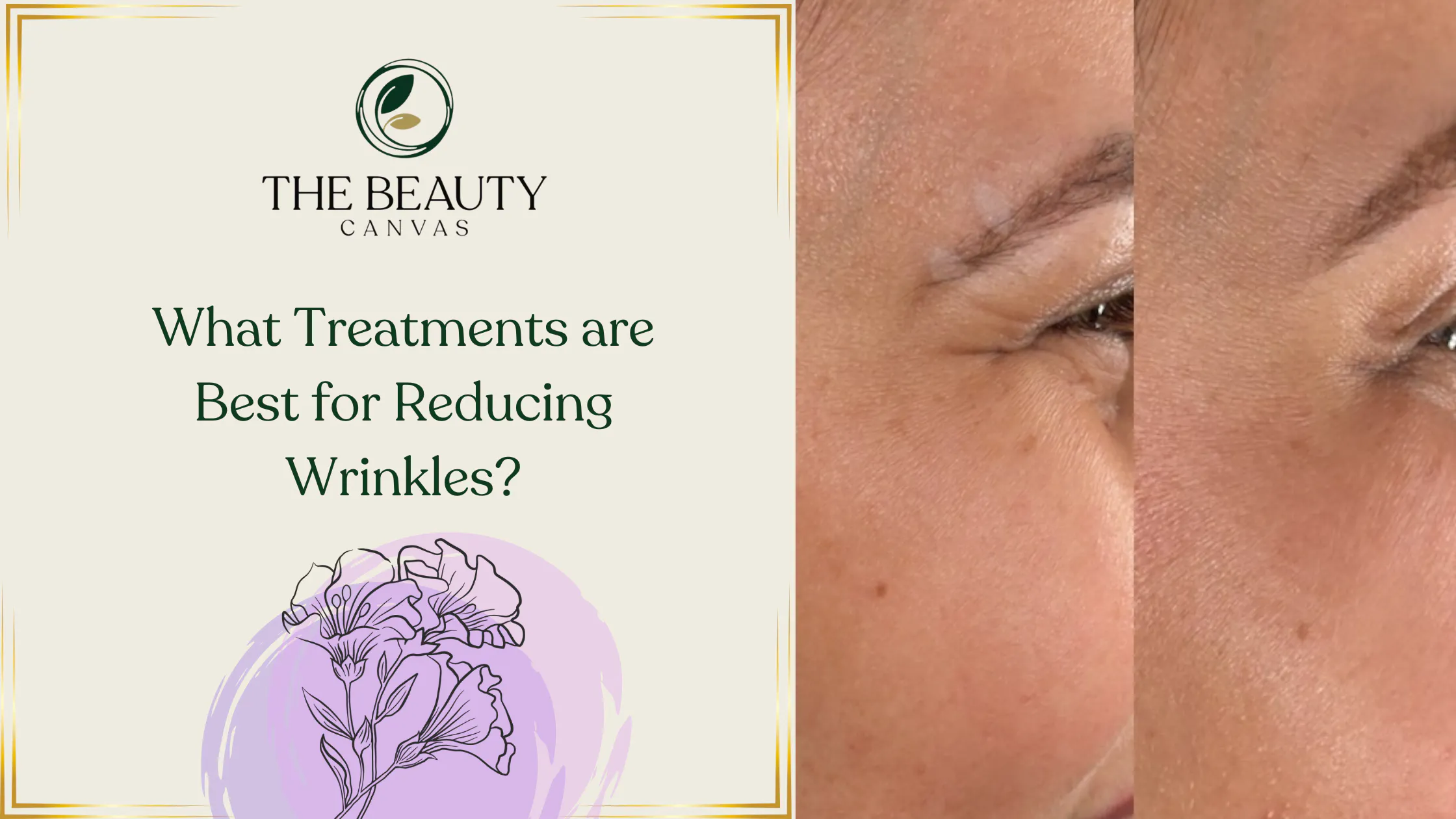
The "best" medical aesthetics treatment for reducing wrinkles depends entirely on the type of wrinkle being targeted (dynamic vs. static) and the root cause, such as repetitive muscle movement, volume loss, or structural collagen depletion.
Advanced aesthetic clinics typically categorize and address wrinkle reduction using a few gold-standard modalities:
1. For Dynamic Wrinkles: Neuromodulators
Dynamic wrinkles appear when you make facial expressions (like smiling, frowning, or raising your eyebrows) and eventually become permanent over time.
- How they work: Injectables like Botox, Dysport, and Xeomin temporarily block nerve signals to targeted facial muscles. By relaxing the muscle, the overlying skin smooths out.
- Best for: Crow’s feet, forehead lines, and glabellar (frown) lines.
- To Consider: Quick, minimal-downtime procedures with results lasting roughly 3 to 4 months. Can be preventative as well, to help reduce lines from setting in over time.
2. For Deep Folds and Hollows: Dermal Fillers & Biostimulators
Static wrinkles and deep folds are primarily caused by structural volume loss (bone resorption and fat pad depletion) as we age.
- Hyaluronic Acid (HA) Fillers: Brands like Juvederm or Revanesse plump the skin and restore lost volume immediately. They work beautifully to soften deeper folds, such as nasolabial folds (smile lines) or marionette lines, by structurally supporting the area from beneath.
- Collagen Biostimulators: Injectables like Sculptra (Poly-L-lactic acid) or Radiesse (Calcium Hydroxylapatite) take a long-term approach. Instead of instantly filling a wrinkle, they trigger the body's natural inflammatory healing response to gradually rebuild a fresh framework of Type I collagen, improving overall skin thickness and elasticity over several months.
3. For Fine Lines & Global Texture: Advanced Laser Resurfacing
When wrinkles are superficial, etched across the face from sun damage , or paired with a compromised texture, light and energy-based devices are incredibly effective.
- Ablative Fractional Lasers (e.g., CO2 or Erbium): These remove thin layers of the skin while heating the sub-surface tissue. They offer the most dramatic, single-session wrinkle eradication but come with a week or more of healing downtime.
- Non-Ablative & Pico-Premium Lasers: Technologies utilizing specialized lens arrays (like fractional picosecond or non-ablative 1064nm/1470nm wavelengths) create targeted microscopic thermal zones deep in the dermis. This stimulates rapid collagen and elastin synthesis to erase fine lines and smooth the skin's surface without breaking the outer skin barrier, keeping social downtime to an absolute minimum.
4. For Skin Laxity: Radiofrequency (RF) Microneedling
When fine wrinkles are accompanied by a loss of skin firmness or sagging, mechanical remodeling is often the best route.
- How it works: Devices combine physical insulated microneedling with a pulse of RF energy delivered directly into the deep dermis.
- The Result: The controlled thermal energy tightens existing collagen fibers and triggers a massive cellular turnover, significantly tightening loose skin and smoothing out crepey textures, particularly around the lower face, jawline, and neck.
The Modern Approach: Combination Therapy
In a professional clinical setting, the most successful rejuvenation protocols rarely rely on just one machine or syringe. For example, a premier treatment plan might pair a neuromodulator to freeze dynamic movement, an HA filler or biostimulator to lift deeper hollows, and a series of collagen-induction laser sessions to perfect the skin's top layer and protect the skin barrier.